

Overview
- The main types of sliding folding doors vary by configuration, panel count, running gear, material, and whether they are internal or external.
- Common styles include concertina and slimline bifolds, multi panel systems, and top hung versus bottom rolling designs.
- Configuration decides how panels fold and stack, while material and threshold choices affect performance, sealing, and access.
- For homes in Dubai, thermally broken aluminium with the right threshold suits the climate best, so match the type to your opening and use.
Introduction
Understanding the types of sliding folding doors helps you choose a system that fits your opening, style, and daily use. For homeowners in Dubai, the right configuration, material, and threshold make a real difference to comfort and longevity. This guide explains each type clearly, from concertina and multi panel designs to top hung and bottom rolling systems. By the end, you will know which folding door style best suits your property and how to specify it.
Types of Sliding Folding Doors
The types of sliding folding doors are grouped by a few key characteristics: how the panels fold, how many panels there are, how they carry their weight, the frame material, and whether they serve internal or external openings. Understanding these categories makes it easy to narrow down the right system for your space.
Below are the main ways folding doors are classified, each explained with its typical uses and strengths so you can see which suits your opening.
1. By Folding Configuration
Folding configuration describes how the panels stack when open, whether they fold entirely to one side or split and fold both ways. This is the most fundamental way to categorise folding door configurations and it affects both looks and access.
2. By Panel Count
The number of panels, from two leaves up to seven or more, determines the opening width and how the doors handle. More panels suit wider openings and change where a traffic door can sit.
3. By Running Gear
Running gear refers to whether the door hangs from a top track or rolls on a bottom track. This influences load, threshold design, and long term smoothness of operation.
4. By Material and Location
Material (aluminium, timber, or UPVC) and whether the door is internal or external shape performance, durability, and sealing. Aluminium dominates external use, especially in demanding climates. Robust external systems such as Folding Sliding Doors in Dubai are typically aluminium for strength and longevity.
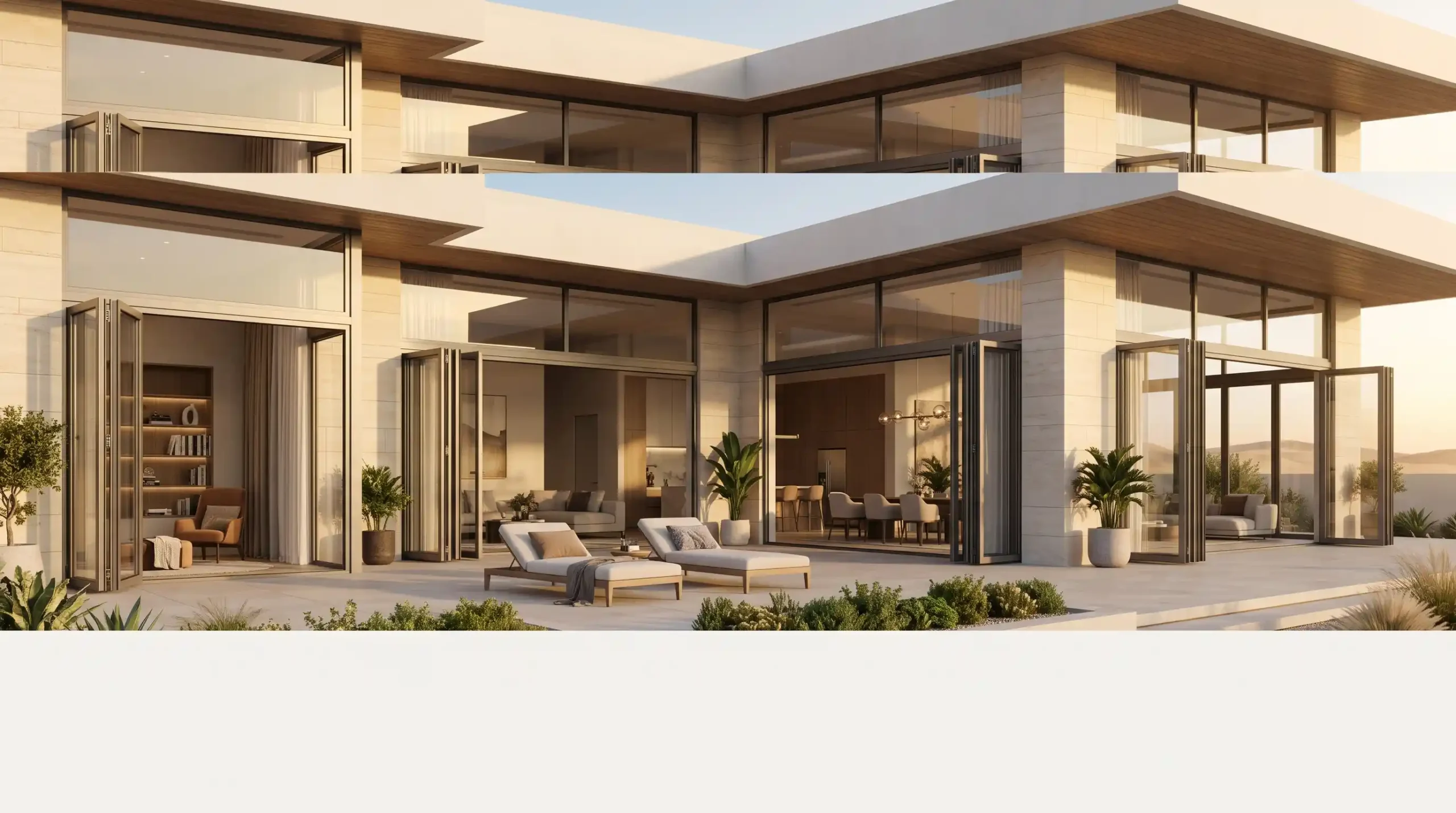
Types of Bifolding Doors by Configuration
Configuration is often the first choice buyers make, since it defines how the opening behaves when the doors are open and closed.
1. All Panels Folding One Way
In this layout, every panel folds and stacks to a single side. It suits openings where you want a clear run to one side, keeping the stack out of the way of furniture or a wall return.
2. Split Fold Both Ways
Here panels divide and fold to both sides of the opening. This balances the stacked panels evenly and can be useful for symmetrical openings or where access is needed from the centre.
3. Configurations with a Traffic Door
A traffic door is a single leaf that opens independently for everyday use without folding the whole set. It is popular for external openings where you want quick daily access as well as the option to open fully.
Concertina Doors / Slimline Bifold Doors
Concertina doors fold in a repeating zigzag, much like the musical instrument they are named after. Slimline versions keep frames narrow for a light, elegant look.
-
What Concertina Doors Are
Concertina doors are simply another name for folding doors that stack in a concertina pattern. The term is often used for slim, multi panel systems, particularly internal dividers where a delicate profile matters.
-
Best Uses for Slimline Bifolds
Slimline concertina bifolds work well as internal room dividers and for compact openings where maximising glass and minimising frame is the priority. For similarly slim aesthetics in sliding form, some homeowners also consider Slim Sliding Doors as an alternative.
Multi Panel Bifolding Doors and Panel Counts
Panel count is central to how a folding door performs, especially on wide openings common in villas.
Choosing the Right Panel Count
A multi panel bifold spreads a wide opening across several leaves so each panel stays a manageable size and weight. Typical residential sets range from three to seven panels, with the count chosen to keep folding smooth and panels easy to handle.
Odd vs Even Panel Layouts
Odd numbered sets often incorporate a traffic door, while even numbered sets split neatly for both way folding. The choice depends on how you want to access the opening day to day.
| Panel Count | Typical Opening | Common Fold | Best For |
|---|---|---|---|
| 2 to 3 panels | Narrow to medium | One way | Small patios, dividers |
| 4 to 5 panels | Medium to wide | One way or split | Living room terraces |
| 6 to 7 panels | Very wide | Split both ways | Large villa openings |
Top Hung vs Bottom Rolling Bifold Doors
How a folding door carries its weight affects installation, threshold design, and operation over time.
-
How Top Hung Systems Work
A top hung bifold carries the panel weight from the head track above, so the bottom track only guides the doors. This keeps the floor track slim and is the preferred approach for quality external aluminium systems, provided the structural lintel can bear the load.
-
How Bottom Rolling Systems Work
Bottom rolling systems carry the weight on the floor track. They can suit situations where the head cannot bear significant load, but the floor track is more substantial and needs regular cleaning to run well.
Bifold Door Materials
Material choice drives durability, appearance, and suitability for internal or external use, and it matters more in demanding climates.
-
Aluminium
Aluminium is strong, slim, and durable, supporting large glass panels and wide spans. With a thermal break and powder coating, it performs excellently for external openings in hot, coastal conditions across the UAE.
-
Timber and UPVC
Timber offers a natural look but needs more upkeep, while UPVC is affordable and insulating but bulkier and limited on span. Both suit specific budgets and settings, though aluminium remains the standard for premium external folding doors.
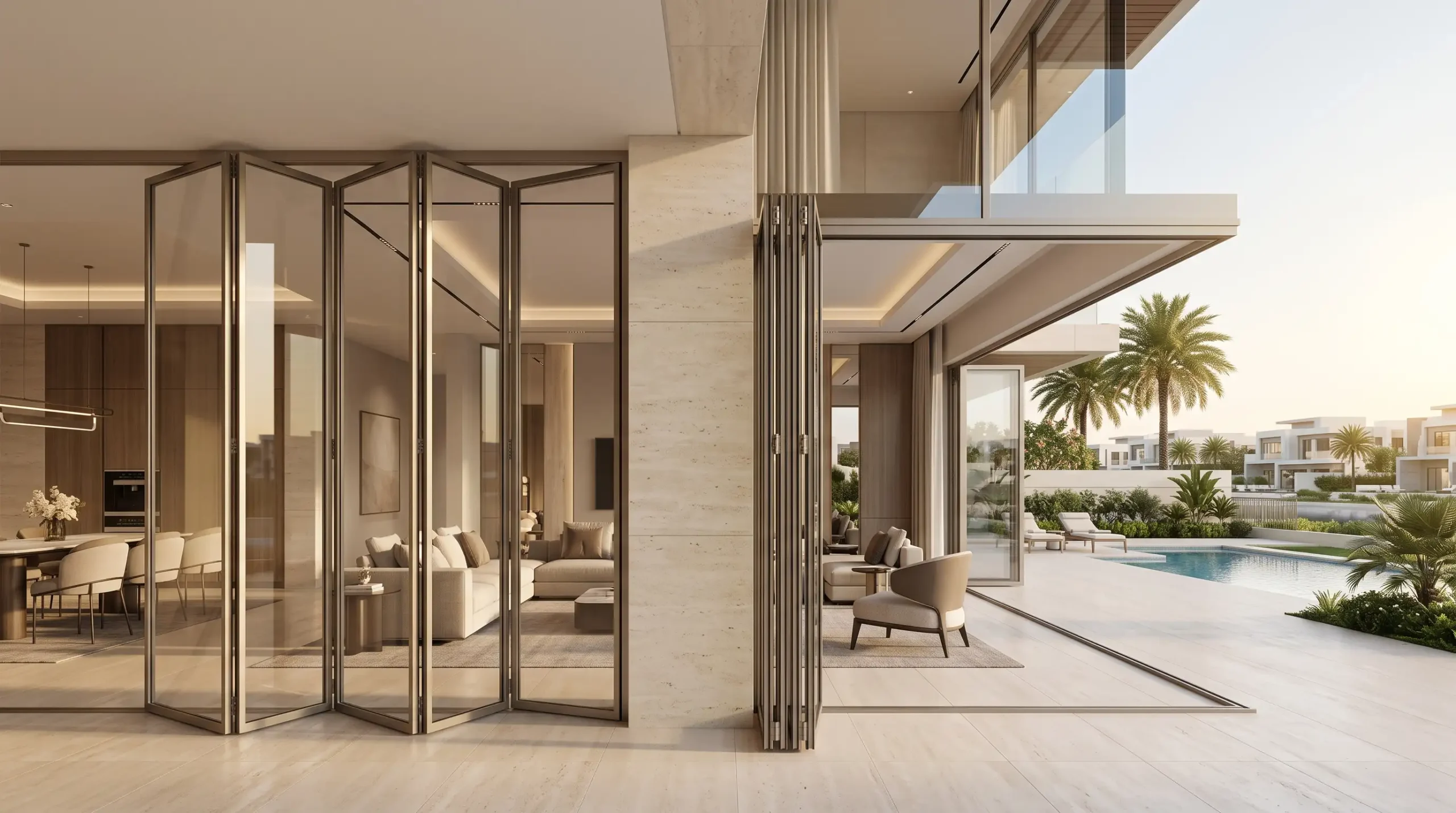
Internal vs External Bifolding Doors
Whether a folding door is used inside or outside changes its priorities entirely, from sealing to security.
-
Internal Folding Doors
Internal folding doors focus on slim looks, light flow, and flexible division of space. They do not need weather sealing, so profiles can be lighter and more delicate, ideal as room dividers.
-
External Folding Doors
External folding doors must resist weather, provide security, and seal against heat and dust. This is why thermally broken aluminium with quality locking and weather seals is the standard for external use in Dubai.
Thresholds and Access Details
The threshold is where the door meets the floor, and it balances weather sealing against ease of access.
Rebated Weather Thresholds
Rebated thresholds provide the strongest weather sealing, with a small upstand that keeps out dust and water. They suit external openings where sealing is a priority, though they create a slight step.
Low and Flush Thresholds
Flush or low thresholds offer near level access for smooth transitions between inside and outside. They prioritise accessibility and clean sightlines, with careful detailing needed to maintain weather resistance.
Terminology: Roomfold vs Frenchfold
Some folding door terms cause confusion, so it helps to clarify the common ones buyers encounter.
What Roomfold Means
Roomfold generally refers to internal folding door systems used to divide rooms. The term describes slim internal bifolds designed for flexible living spaces rather than external weatherproof openings.
What Frenchfold Means
Frenchfold describes a configuration that combines a central pair of French style doors with folding panels to each side. It offers the everyday convenience of French doors plus the option to fold the whole opening away.
Explore Sliding Folding Doors at Nitrex Tech
Choosing among the types of sliding folding doors comes down to configuration, panel count, running gear, material, and threshold, all matched to whether the opening is internal or external. For external openings in Dubai, thermally broken aluminium with the right threshold delivers the best balance of durability, sealing, and looks. Confirm your opening size and daily use, then request tailored advice. To see real examples and finishes, browse the Nitrex Projects portfolio for practical inspiration before you decide.
FAQ’s
What is the most popular bifold door configuration?
For wide external openings, an odd panel set with a traffic door is very popular because it allows quick daily access plus full opening. The best configuration depends on your opening width and use.
How many panels can a bifold door system have?
Most residential systems range from two to seven panels, though larger engineered systems can exceed this. The count is chosen so each panel stays a manageable size and weight.
Are concertina doors the same as bifold doors?
Yes. Concertina doors are another name for folding bifold doors that stack in a zigzag pattern. The term is often used for slim, multi panel internal systems.
Which is better, top hung or bottom rolling bifold?
Top hung is generally preferred for external aluminium doors because it keeps the floor track slim, provided the lintel can bear the load. Bottom rolling suits cases where the head cannot carry weight.
Can sliding folding doors be used as room dividers?
Yes. Slim internal folding doors, sometimes called roomfold systems, are excellent room dividers, letting you open or separate spaces flexibly without weather sealing requirements.
What is the best material for exterior sliding folding doors?
Thermally broken aluminium is the standard for exterior folding doors, offering strength, slim frames, durability, and heat performance well suited to Dubai’s climate.
Do all bifold door types work for wide openings?
No. Aluminium multi panel systems handle wide openings best, while UPVC and some timber options are limited on span. Panel count and material must suit the width.
What is a Frenchfold bifold door?
A Frenchfold combines a central pair of French style doors with folding panels on each side, giving everyday French door access plus the option to fold the full opening away.
Are frameless sliding folding doors available?
Truly frameless folding doors are uncommon because panels need frames to fold and seal, but slimline systems minimise the frame for a near frameless look with maximum glass.
Which type works best for Dubai’s climate?
Thermally broken aluminium external folding doors with solar control glazing and a rebated weather threshold perform best in Dubai heat, glare, and occasional sandy winds.
Can different panel sizes be mixed in one system?
Usually panels within a set are kept equal for smooth folding and even looks, but configurations with a traffic door can vary. Your supplier confirms what your chosen system allows.
Do all types come with flush threshold options?
Many systems offer low or flush thresholds for level access, though weather sealing is strongest with a rebated threshold. Availability depends on the specific system.
Which type is easiest to operate daily?
Configurations with a traffic door are easiest for everyday use, and top hung systems generally glide smoothly. Quality running gear matters most for effortless daily operation.
Can sliding folding doors be motorized?
Motorisation is less common on folding doors than on large sliding systems, but certain systems can be automated. Discuss options with your supplier for your specific setup.
Which configuration offers the best security?
External aluminium systems with multi point locking, laminated or toughened glass, and quality hardware offer strong security regardless of fold direction. Specification matters more than configuration.