
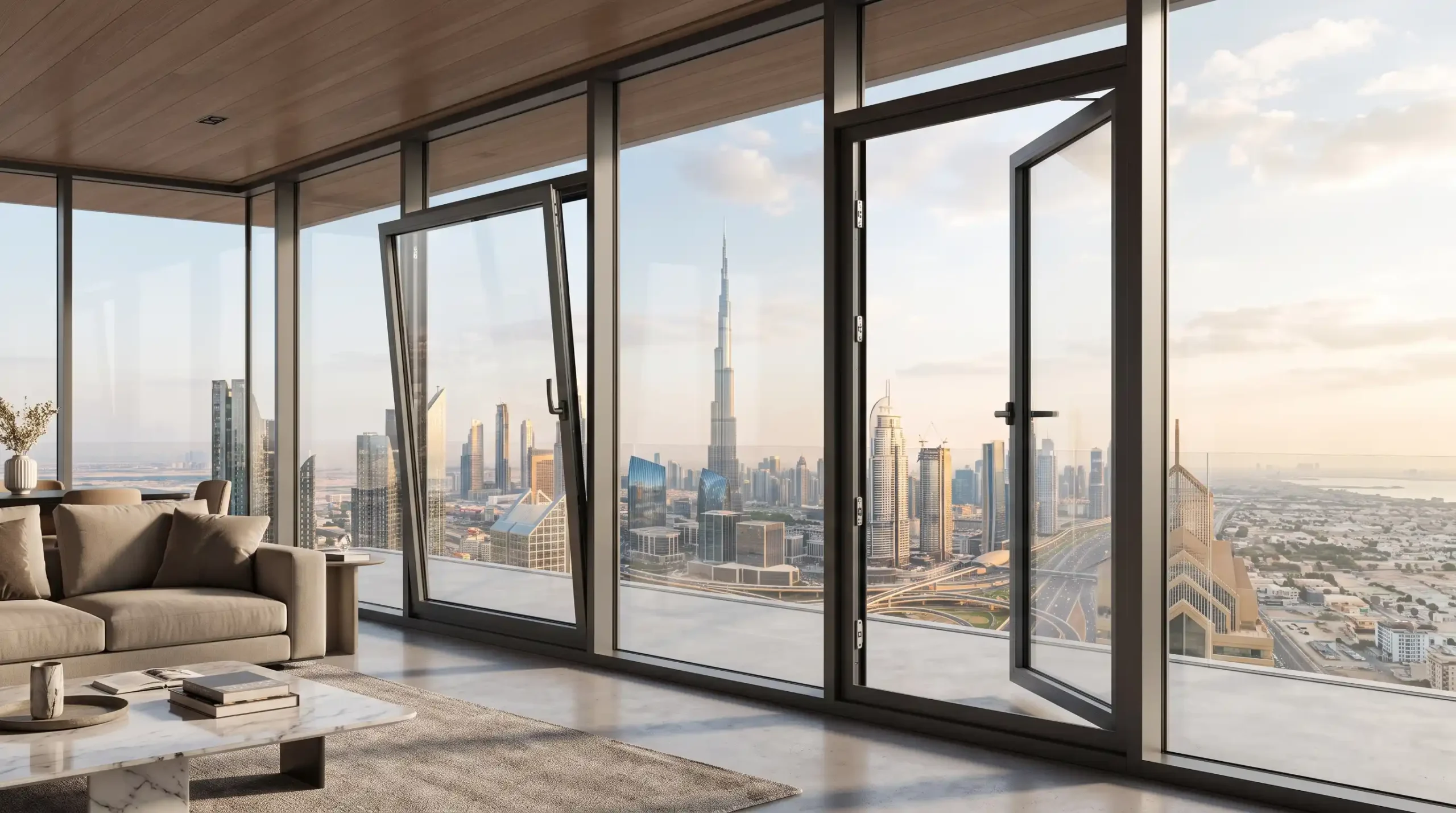
Choosing tilt and turn vs casement windows shapes how a room ventilates, cleans, and performs for years. For homeowners in Dubai, where heat, dust, and high rise living are common, the operating style matters as much as the glass. Both are quality options, but they behave very differently in daily use. This guide compares operation, security, energy efficiency, and suitability, helping you specify the right window for your project and property type.
Quick Facts!
- The tilt and turn vs casement windows choice comes down to operation: tilt and turn opens two ways (inward tilt and full inward swing), while casement swings outward on side hinges.
- Casement windows give broad, immediate airflow and tight seals, while tilt and turn offer secure trickle ventilation, easy inside cleaning, and a modern look.
- Both can be highly energy efficient; performance depends on glazing, frame, and installation, not the style label alone.
- For apartments and high rise homes in Dubai, tilt and turn suit safe ventilation and inside cleaning, while casement suits maximum airflow on lower floors.
Tilt and Turn vs Casement Windows: What Is the Basic Difference?
The basic difference in tilt and turn vs casement windows is how the sash moves. A casement window is hinged on one side and swings outward like a door, opening fully in a single motion. A tilt and turn window is a dual mode design: turn the handle one way and it tilts inward from the top for ventilation, turn it further and it swings fully inward like a door.
1. Single Mode vs Dual Mode
A casement is a single mode window, open or closed, delivering broad airflow when open. A tilt and turn is a dual mode window, offering a secure tilt position for background ventilation and a full inward swing for cleaning and wider airflow. This dual functionality is the defining distinction between the two.
2. Inward vs Outward Opening
Casement windows open outward, needing exterior clearance, while tilt and turn windows open inward, needing interior space when fully swung. This affects where each suits, since outward opening can interfere with balconies or walkways, while inward opening needs clear space inside.
How the Two Window Types Operate
Understanding the mechanics clarifies why each window suits different situations.
1. Casement Window Operation
A casement window uses side hinges and a simple crank or handle to swing the sash outward. With minimal moving parts, it is straightforward to operate, even over a counter, and it seals tightly as the sash presses against the frame when closed.
2. Tilt and Turn Window Operation
A tilt and turn window uses a single handle with two positions. One position tilts the top of the sash inward for secure ventilation while the base stays locked; a further turn swings the whole sash inward. This gives controlled airflow or full opening from one handle.
| Feature | Casement | Tilt and Turn |
|---|---|---|
| Opening modes | One (outward swing) | Two (tilt and swing) |
| Direction | Outward | Inward |
| Ventilation | Broad, immediate | Controlled or full |
| Cleaning | Exterior access needed | Cleaned from inside |
| Look | Classic and versatile | Modern, large glazing |
Pros and Cons of Casement Windows
Casement windows are a proven, versatile choice with clear strengths and a few trade offs.
Advantages of Casement Windows
Casement windows offer broad, immediate ventilation, unobstructed views when open, and a tight seal that improves in windy conditions as the sash presses against the frame. Their simple crank operation suits hard to reach spots, and they lend a classic look to many properties.
Disadvantages of Casement Windows
The outward swing needs exterior clearance and can interfere with balconies, walkways, or landscaping. Cleaning the exterior of upper floor casements is harder, and exposed hinges face the elements, which is a long term maintenance consideration in a dusty climate.
Also Read: Types of Pivot Hinges
Pros and Cons of Tilt and Turn Windows
Tilt and turn windows bring versatility and a modern feel, with considerations around space and cost.
Advantages of Tilt and Turn Windows
Tilt and turn windows offer secure background ventilation in tilt mode, a wide inward swing for airflow and easy inside cleaning, and multi point locking for security. Their sleek design suits large glazing and modern interiors, and inside cleaning is a real benefit on upper floors.
Disadvantages of Tilt and Turn Windows
The inward swing needs clear interior space, so blinds, curtains, or furniture must not obstruct the sash. They typically cost more upfront than casement windows and use more complex hardware, though this supports their dual functionality.
How Do They Compare on Safety and Security?
Both window types can be secure, but their designs offer different safety benefits.
Security Hardware
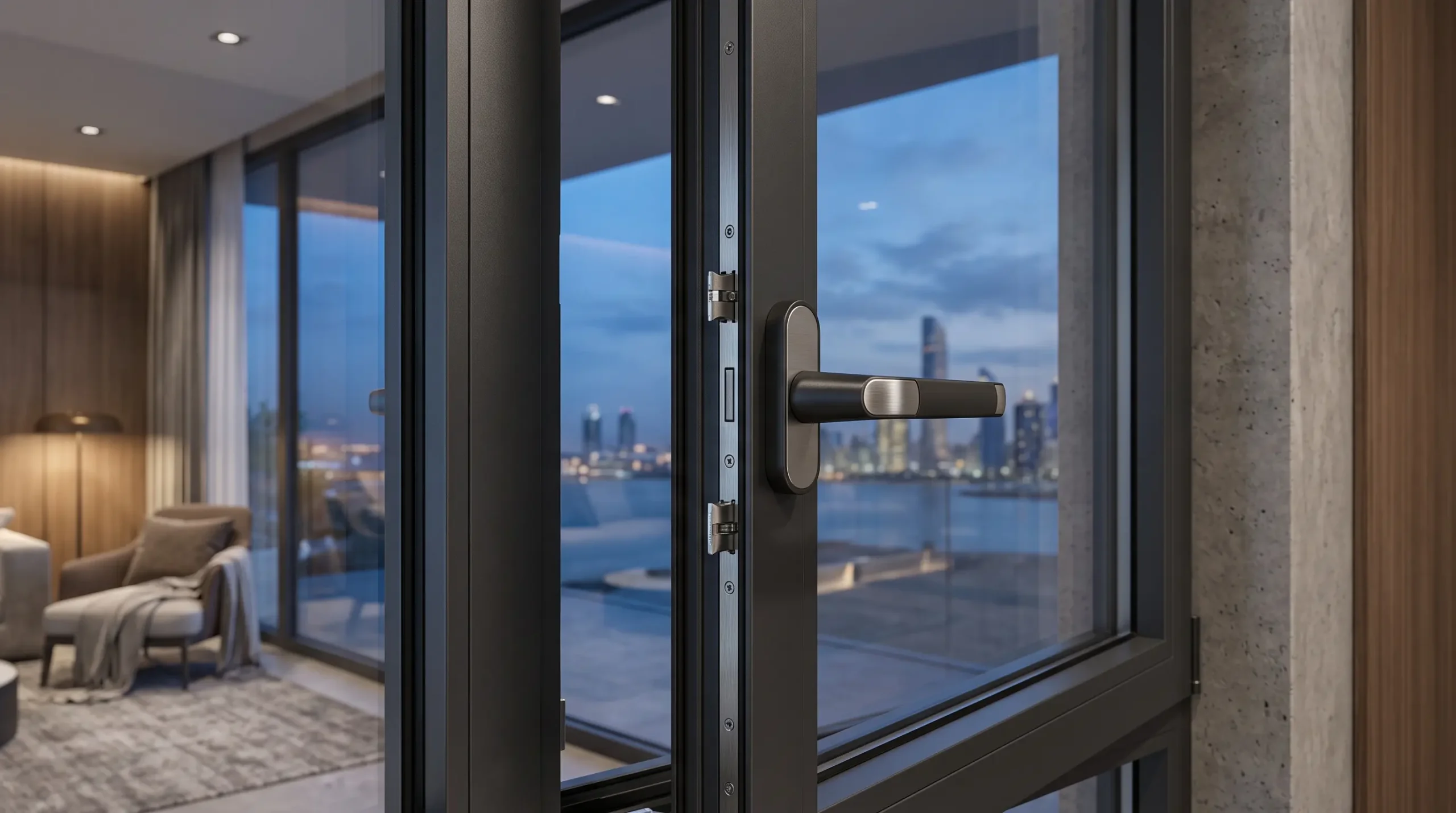
Tilt and turn windows commonly feature multi point locking around the frame, which enhances security. Casement windows also seal and lock well, and modern hardware improves on older exposed hinge designs, so both can be specified securely.
Ventilation Safety
The tilt mode lets fresh air in without fully opening the window, which reduces the risk of leaning or falling out of a fully open window. This makes tilt and turn appealing for apartments and homes where controlled, safer ventilation matters.
How Do Different Window Types Affect Energy Efficiency?
Energy efficiency is a top concern in Dubai’s climate, and both window types can perform strongly when specified well.
Sealing and Airtightness
Casement windows seal tightly as wind presses the sash against the frame, while tilt and turn windows use multi gasket systems and multi point locking to reduce drafts. Both achieve strong airtightness when well made and correctly installed.
Glazing and the Bigger Picture
The U.S. Department of Energy notes that low emissivity coatings, glazing choices, spacers, frame materials, and operation type all influence energy performance. In Dubai, solar control glazing to reduce heat gain matters more than the style label, so specify the glass carefully for local heat.
Also Read: Pivot Door Buying Guide
Which Operation Works Better with the Architecture?
The right window often depends on the building style and how the opening interacts with its surroundings.
Modern and Contemporary Homes
Tilt and turn windows suit modern architecture and large glazed areas, offering clean lines and a minimalist look. They complement contemporary villas and apartments across the UAE where expansive glass is desired. The same clean, modern language pairs well with statement entrances such as pivot doors in dubai.
Traditional and Space Constrained Settings
Casement windows suit both traditional and contemporary designs and work well where interior space is limited, since they open outward. They are a flexible choice for varied property types and smaller rooms.
Performance Depends on the Complete System
Window style alone does not determine performance; the whole system does.
Why Ratings Matter More Than Style
The National Fenestration Rating Council explains that its U-Factor ratings represent the performance of the entire window, with lower values meaning better insulation. Judging energy efficiency through certified ratings and full system specifications is more reliable than comparing style labels alone.
Frame, Glass, and Installation Together
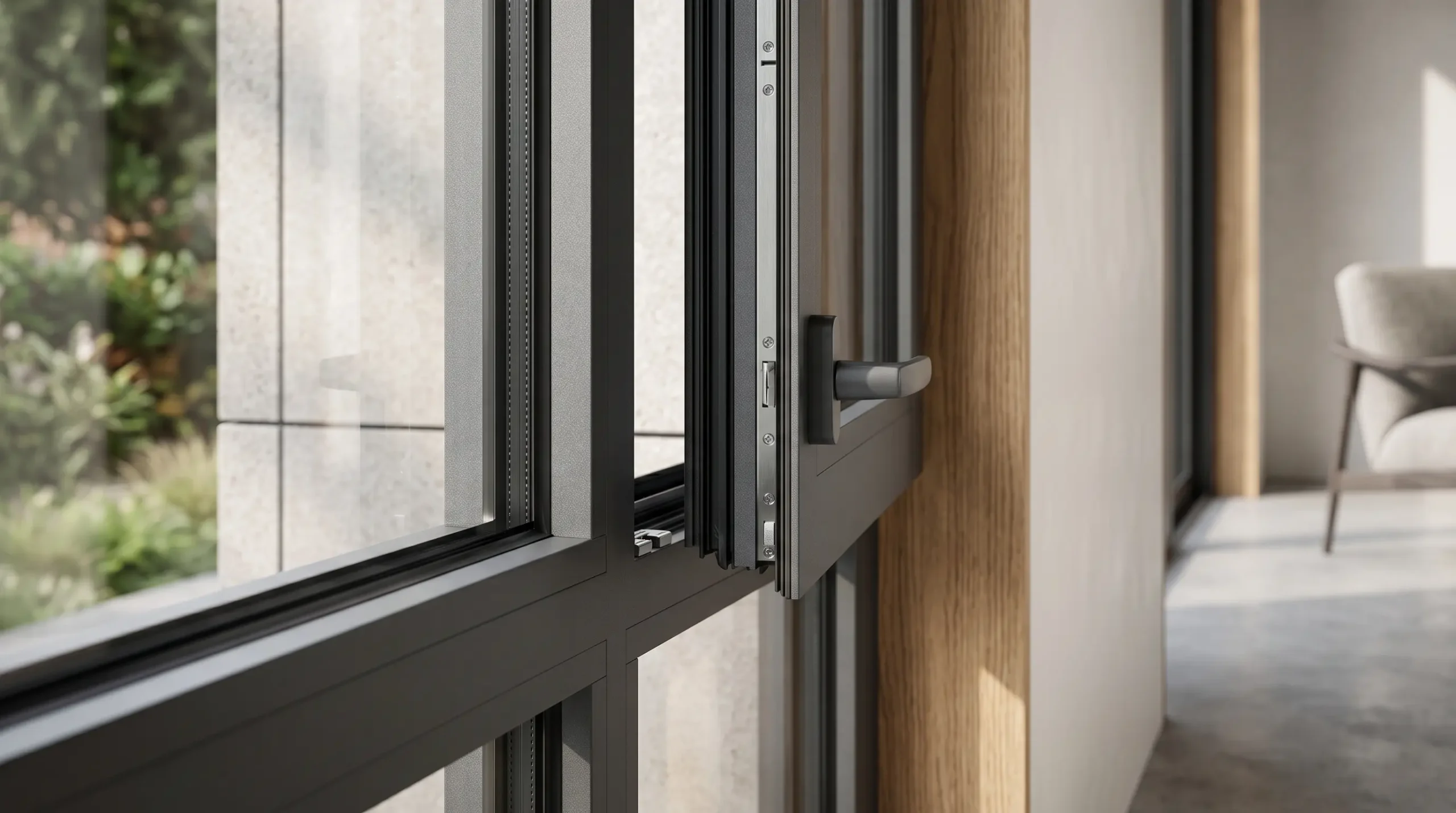
A window’s real performance comes from the frame material, glazing, seals, and quality of installation working together. A thermally broken aluminium frame with solar control glazing, correctly fitted, outperforms any style chosen on operation alone.
How to Choose the Right Type for Your Project
Matching the window to your property, use, and priorities makes the decision clear.
1. Match the Window to the Room and Floor
Choose tilt and turn for upper floors and apartments where safe ventilation and inside cleaning matter, and where interior space allows the inward swing. Choose casement where maximum immediate airflow and outward opening suit the room, such as lower floors with exterior clearance.
2. Prioritise Glazing and Certified Performance
Whichever operation you choose, prioritise solar control glazing, a thermally broken frame, and quality installation for Dubai conditions. Compare certified performance figures rather than style alone to ensure the window meets your energy goals.
Get Your Windows from Nitrex Tech
The tilt and turn vs casement windows decision comes down to how you want the window to operate: dual mode versatility and inside cleaning, or broad outward airflow and a classic look. Both perform excellently in Dubai with a thermally broken frame, solar control glazing, and quality installation, so match the operation to your room, floor, and space. For tailored advice and quality windows suited to the local climate, speak to Nitrex Tech for guidance on your project.
FAQ’s
Which is cheaper, tilt and turn or casement?
Casement windows are generally cheaper upfront due to simpler hardware and a single function design. Tilt and turn windows cost more initially but offer dual functionality, which many find worth the difference.
Can both types be double or triple glazed?
Yes. Both casement and tilt and turn windows accept double and triple glazing, including solar control and laminated units, which is important for heat and sound management in Dubai.
Which handles Dubai dust and sand better?
Both cope well with quality seals. Tilt and turn windows can be cleaned entirely from inside, which is a practical advantage in dusty conditions, while casement exteriors need outside access to clean.
Which allows more airflow?
Casement windows give broader, immediate airflow when fully open. Tilt and turn windows offer controlled trickle ventilation in tilt mode plus a full inward swing, giving more flexible airflow control.
Can tilt and turn windows be automated?
Yes. Tilt and turn windows can be automated for convenient operation, which suits hard to reach or large openings. Automation options depend on the system, so confirm with your supplier.
Which is safer for homes with children?
Tilt and turn windows can be safer, as the tilt mode allows ventilation without a fully open sash, reducing the risk of leaning or falling out. Quality restrictors improve safety on both types.
Do both types come in aluminium frames?
Yes. Both casement and tilt and turn windows are widely available in aluminium, which offers strength, slim frames, and durability well suited to the UAE climate.
Which requires less maintenance long term?
Tilt and turn windows have more hardware but are easy to clean from inside, while casement windows are simpler mechanically but have exposed hinges. Both are low maintenance with quality hardware and routine care.
Can I replace casement windows with tilt and turn?
Often yes, if the opening and interior space suit the inward swing. A site survey confirms whether the opening and surrounding space can accommodate tilt and turn operation.
Which is better for high rise apartments?
Tilt and turn windows are often better for high rise apartments in Dubai because they open inward for safe cleaning from inside and offer secure tilt ventilation without a fully open sash.
Do tilt and turn windows leak when tilted in rain?
Quality tilt and turn windows are designed to resist water ingress in the tilt position, but heavy driven rain may still enter a tilted window. Closing fully in storms is advisable, as with any open window.
Which provides better soundproofing?
Soundproofing depends mainly on glazing, such as laminated acoustic glass, rather than the operation. Both types can be specified for strong sound insulation on busy roads in Dubai.
Can both types be used in commercial buildings?
Yes. Both are used in commercial buildings. Tilt and turn suit controlled ventilation and safe inside cleaning at height, while casement windows suit maximum airflow where exterior clearance allows.
Which has a longer lifespan?
Both last many years in quality aluminium. Casement windows have fewer moving parts, while tilt and turn hardware is robust but more complex, so hardware quality influences longevity for both.
Which is more common in UAE construction?
Both appear across the UAE, with tilt and turn increasingly popular in modern apartments and villas for their versatility and safe inside cleaning, and casement used where outward opening and airflow suit.
Sources
- National Fenestration Rating Council (NFRC): energy performance ratings including U-Factor for the whole window.
- The Aluminium Federation (alfed.org.uk): information on aluminium properties, finishes, and durability.