
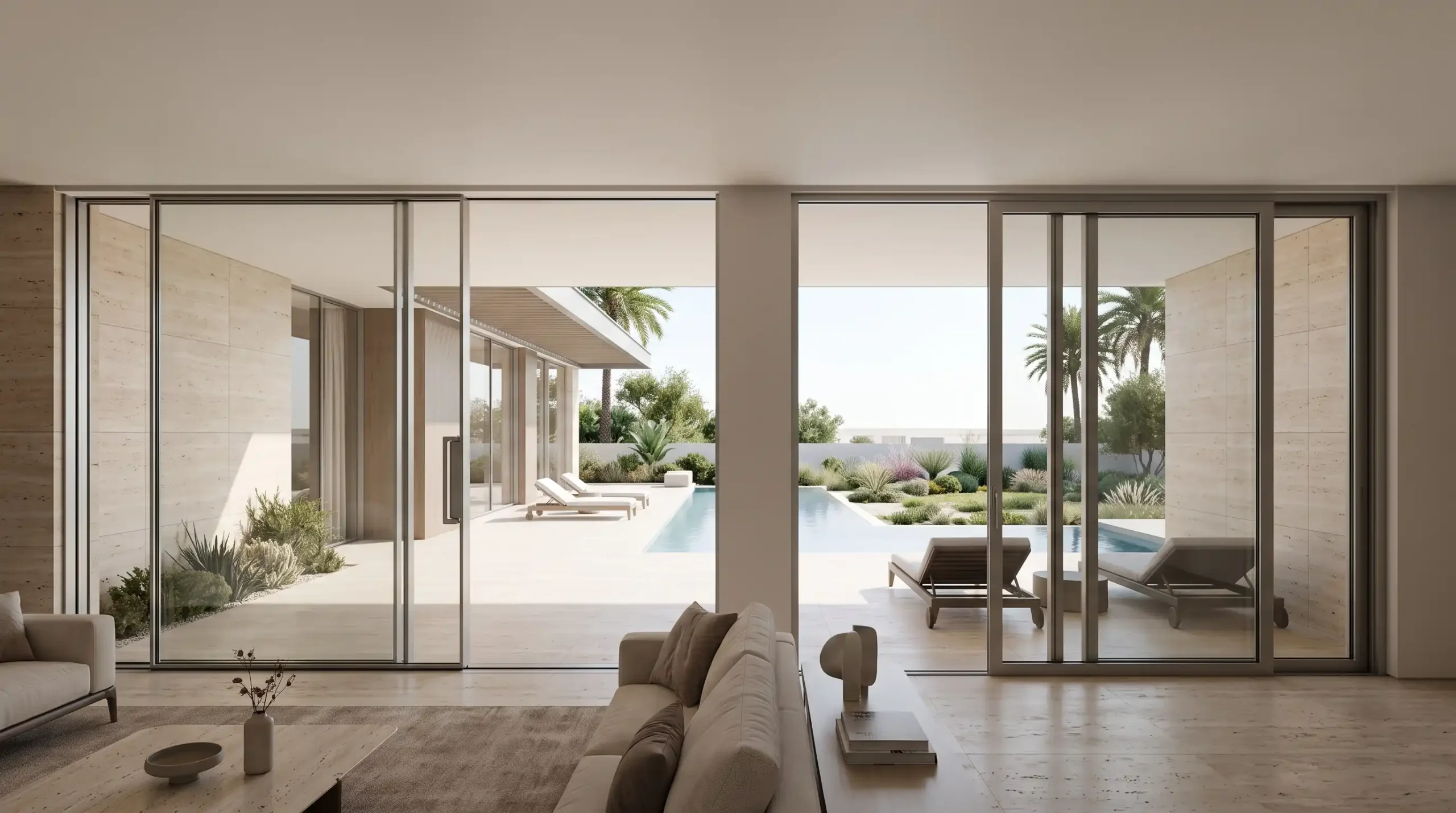
Choosing between a lift and slide door vs sliding door affects how large your glass can be, how well it seals, and how effortlessly it moves. For homeowners in Dubai, where wide openings and demanding heat are common, understanding the mechanism behind each system matters. This guide compares operation, sealing, weight capacity, and cost with local conditions in mind, helping you specify the right glazing solution for your property, budget, and everyday comfort.
Overview
- The lift and slide door vs sliding door choice comes down to weight capacity, sealing, and how the door operates: lift and slide handles far heavier panels and seals tighter when closed.
- Standard sliding doors are lighter, simpler, and cost less, suiting smaller openings and everyday use.
- Lift and slide systems lift the panel off its seals to glide effortlessly, then drop it down to compress the seals for excellent weather and thermal performance.
- For large openings and coastal conditions in Dubai, lift and slide is usually the stronger choice, while straight sliders suit modest, budget conscious projects.
Lift and Slide Door vs Sliding Door
Both systems slide horizontally and can look almost identical when closed, but they are engineered differently and perform differently once you use them. The real differences in the lift and slide door vs sliding door decision show up in six practical areas, explained below.
Running Mechanism
A standard sliding door rolls on wheels that stay in constant contact with the track, so the panel is always resting on its rollers. A lift and slide door works the opposite way: turning the handle raises the whole sash off its seals and rollers, so it floats along the track, then lowers to lock down when closed. This single mechanical difference drives every other difference between the two.
Sealing When Closed
A straight slider relies on brush seals that stay in light contact as the panel moves, which lets some air and dust pass. A lift and slide drops the panel onto compression seals when lowered, squeezing them tight along the full length of the door. The result is noticeably better resistance to heat, wind driven dust, and water, which matters in Dubai conditions.
Panel Weight and Glass Size
Because a standard slider carries the glass on its rollers at all times, there is a practical limit to how heavy and large the panel can be before operation suffers. A lift and slide lifts the weight off the rollers during movement, so it can carry far heavier and larger panes, enabling taller, wider glass with slim frames.
Operating Effort
A standard slider opens with a simple push and needs no handle turn, which is quick for light, everyday use. A lift and slide needs a handle turn to lift the panel first, but once lifted, even very heavy glass glides with one hand. On large panels, the lift and slide is actually easier to move than a heavily loaded standard slider.
Security and Locking
When a lift and slide panel is lowered, it sits locked down onto its track and seals along its whole length, which adds stability and resistance to being forced. A standard slider secures at its locking points but does not clamp down the full length. Both are secure with multi point locking and laminated glass, but the lift and slide has a structural edge when closed.
Cost
The lift and slide mechanism, heavier hardware, and stronger seals make it more expensive to buy and install than a standard slider. A straight sliding door is simpler and more affordable, which is why it remains the practical choice for smaller openings and tighter budgets. Both are available as quality aluminium sliding doors for residential and commercial use.
| Difference | Lift and Slide Door | Standard Sliding Door |
|---|---|---|
| Mechanism | Panel lifts off seals to glide | Panel always rolls on wheels |
| Sealing | Tight compression seal | Light brush seal |
| Panel weight and size | Very heavy, very large | Moderate |
| Operating effort | Handle turn, then effortless | Simple push |
| Security when closed | Locks down full length | Locks at points |
| Cost | Higher | Lower |
How Does a Lift and Slide Door Work?
Understanding the lift slide mechanism explains why these doors perform so well on large openings.
The Lift and Lower Mechanism
Turning the handle 180 degrees rotates a gear that raises the sash off its rollers and lifts it clear of the compression seals. In this raised position, the panel glides almost frictionlessly along the track. Returning the handle lowers the panel, dropping it onto its seals and locking it firmly in place.
Why This Improves Sealing
Because the panel drops down onto compression seals when closed, the door seals far more tightly than a standard slider whose brushes stay in constant light contact. This tight seal is what gives lift and slide systems their strong weather resistance and thermal performance, valuable in Dubai’s heat.
Handling Heavy Glass with Ease
The lifting action is what allows these systems to carry very heavy panels. By taking the weight off the rollers during movement, quality aluminium lift and slide doors can move large panes with a single hand, something a standard slider cannot match at the same size.
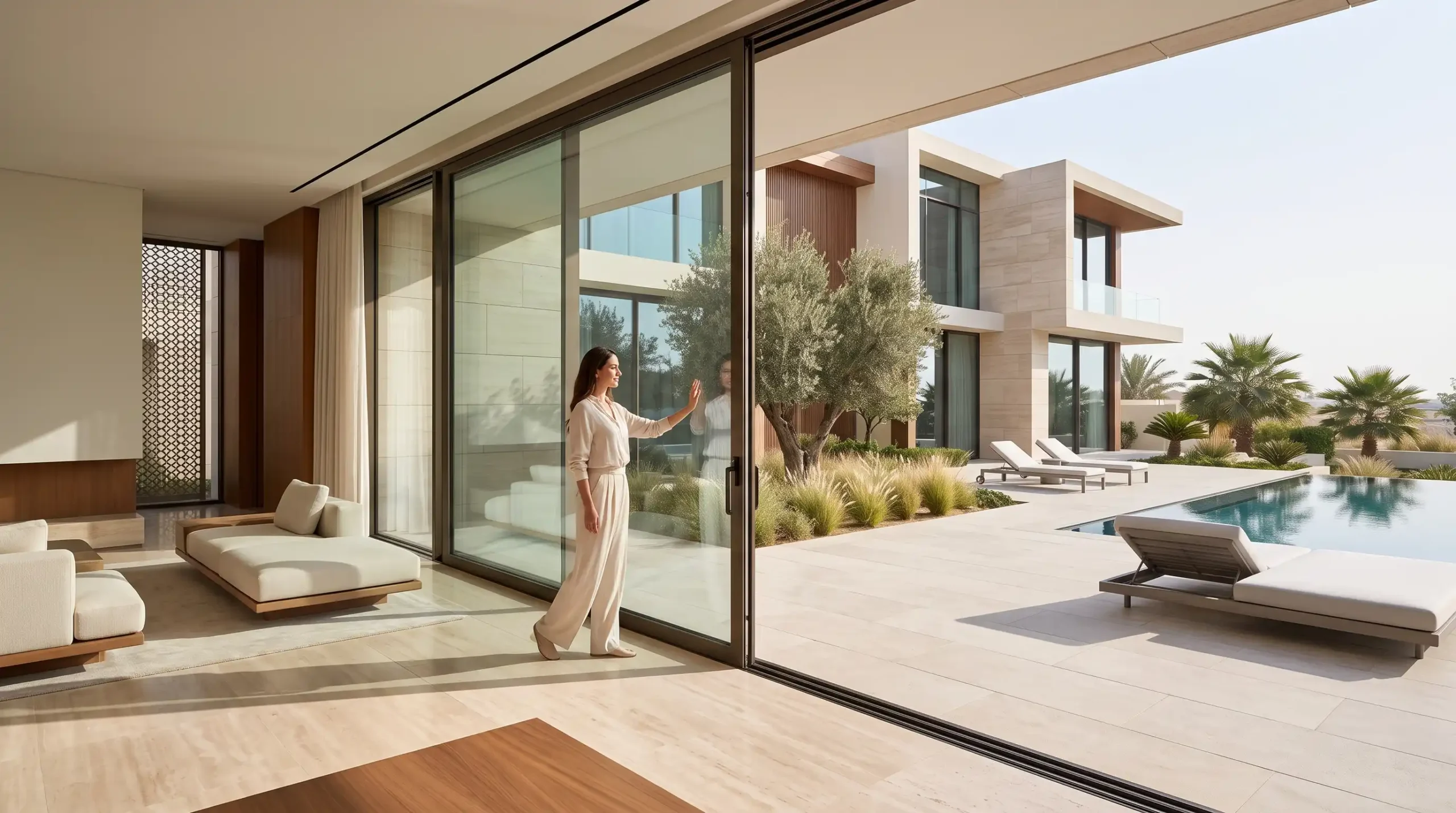
What Are the Advantages of a Lift and Slide Door?
Lift and slide doors offer distinct benefits that justify their higher cost on the right project.
Superior Sealing and Thermal Performance
The compression seal when closed keeps heat, dust, and noise out more effectively than a brush sealed slider. For properties in Dubai facing intense sun and occasional sandy winds, this tighter seal improves comfort and reduces cooling load.
Larger, Heavier Panels
Lift and slide systems support significantly heavier glass, enabling taller and wider panels with slim sightlines. This makes them ideal for expansive villa openings where large uninterrupted glass is the goal.
Effortless Operation and Security
Despite the heavier glass, operation is smooth and light thanks to the lift mechanism. When lowered, the panel locks down along its full length, contributing to strong security and stability in the closed position.
What Are the Advantages of a Straight Sliding Door?
Standard sliding doors remain a popular, practical choice for many openings.
Simplicity and Lower Cost
Straight sliders have a simpler mechanism, which makes them more affordable to buy and install. For smaller openings and tighter budgets, they deliver the sliding function without the premium of a lift mechanism.
Easy Everyday Use
A standard slider opens with a simple push, with no handle turn needed to lift the panel. This makes it quick and intuitive for frequent daily access, such as a regularly used balcony or terrace door.
Slim, Modern Aesthetics
Quality sliders offer slim frames and large glass for a clean, contemporary look. For minimal sightlines on lighter openings, many homeowners consider slim sliding doors in dubai to maximise the view.
Which Option Is Better for Large Openings?
Large openings are where the two systems diverge most, and where the choice really matters for villas and open plan spaces in Dubai.
Weight and Span Capacity
Heavy duty sliding doors in lift and slide form handle the largest, heaviest panels with ease, making them the natural choice for very wide spans. Standard sliders can struggle with the weight and friction of oversized glass, affecting smoothness over time.
Sealing Across Wide Spans
The wider the opening, the more sealing matters. Lift and slide compression seals maintain performance across large spans, keeping interiors comfortable. This combination of weight capacity and sealing is why lift and slide dominates premium large openings.
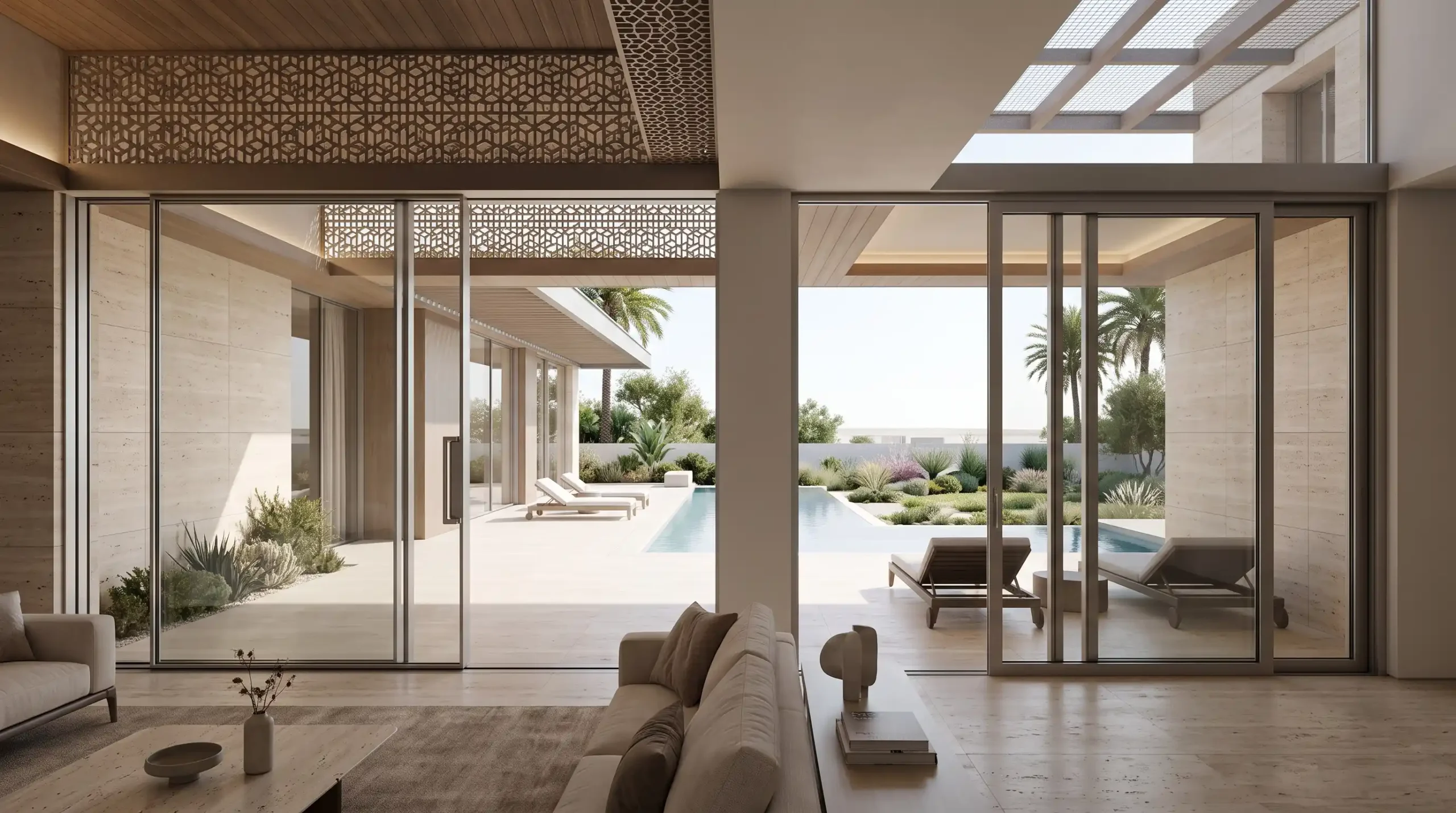
When Should I Specify Each Type?
Matching the system to the project ensures the best balance of performance and value.
Specify Lift and Slide When
Choose lift and slide for large or heavy glass, wide villa openings, coastal exposure, and where tight sealing and thermal performance are priorities. It suits premium residential and commercial projects in Dubai that demand both scale and comfort.
Specify a Standard Slider When
Choose a straight slider for smaller to medium openings, tighter budgets, sheltered locations, and doors used frequently for quick access. It delivers reliable function where oversized glass and maximum sealing are not essential.
Get Your Lift and Slide Doors from Nitrex Tech
Deciding on a lift and slide door vs sliding door comes down to opening size, panel weight, sealing needs, and budget. For wide, heavy openings and demanding coastal or high heat conditions in Dubai, lift and slide delivers effortless operation and superior sealing, while standard sliders remain a smart, cost effective choice for modest openings. Confirm your glass size and performance priorities, then request tailored advice from Nitrex and browse real examples in the Nitrex Projects portfolio.
FAQ’s
Is a lift and slide door more expensive than a standard sliding door?
Yes. The lift mechanism, heavier hardware, and stronger sealing make lift and slide systems more expensive than standard sliders. The added cost is justified on large, heavy openings where performance matters most.
Which is more energy efficient?
Lift and slide doors are generally more energy efficient because the panel drops onto compression seals when closed, reducing air leakage. With thermally broken frames and solar control glazing, they perform very well in Dubai heat.
Can both types be double or triple glazed?
Yes. Both systems accept double and triple glazing, including solar control, laminated, and acoustic units. Lift and slide’s higher weight capacity makes it especially suited to heavier triple glazed panels.
Which provides better weather sealing?
Lift and slide provides better weather sealing. The compression seal engaged when the panel lowers keeps out dust, wind, and water more effectively than the brush seals used on standard sliding doors.
Which is easier to operate with heavy glass panels?
Lift and slide is far easier with heavy glass. Lifting the panel off its rollers reduces friction dramatically, so even very large panes glide smoothly with one hand, unlike a heavily loaded standard slider.
Can a lift and slide door be automated?
Yes. Larger lift and slide systems can be motorised for effortless operation, which is useful on very heavy panels. Automation options depend on the specific system and should be confirmed with your supplier.
Which handles wind loads better in Dubai?
Lift and slide systems generally handle wind loads better because of their robust construction and tight compression seals. This makes them well suited to exposed and high rise locations across Dubai.
Do both types come in aluminium frames?
Yes. Both lift and slide and standard sliding doors are widely available in aluminium, which offers the strength, slim frames, and durability best suited to the UAE climate.
Which requires more maintenance long term?
Both are low maintenance, mainly needing tracks kept clear of dust and sand. Lift and slide hardware is more complex, but quality systems are durable and require only routine care to keep operating smoothly.
Can I replace a standard sliding door with a lift and slide?
Often yes, if the opening and structure suit the heavier system. A site survey confirms whether the lintel, threshold, and frame can accommodate lift and slide hardware or need adjustment.
Which is more secure against break ins?
Lift and slide doors offer strong security because the lowered panel locks down along its length. Both systems are secure with multi point locking and laminated or toughened glass, so specification is key.
Which is better for coastal properties in Dubai?
Lift and slide is often better for coastal properties in Dubai thanks to superior sealing against wind driven dust and salt air. Powder coated aluminium further improves corrosion resistance near the sea.
What is the maximum panel weight each system can handle?
Capacity varies by system, but lift and slide can handle panels weighing several hundred kilograms, far more than a standard slider. The manufacturer’s specification confirms the exact limit for each system.
Which offers a lower threshold option?
Both offer low threshold options for near level access. Lift and slide can achieve strong sealing even with lower thresholds because the panel compresses onto its seals when lowered.
Can both types be used in commercial projects?
Yes. Both are used in commercial projects, with lift and slide suiting large feature openings and high performance requirements, while standard sliders suit lighter, high frequency access points.