
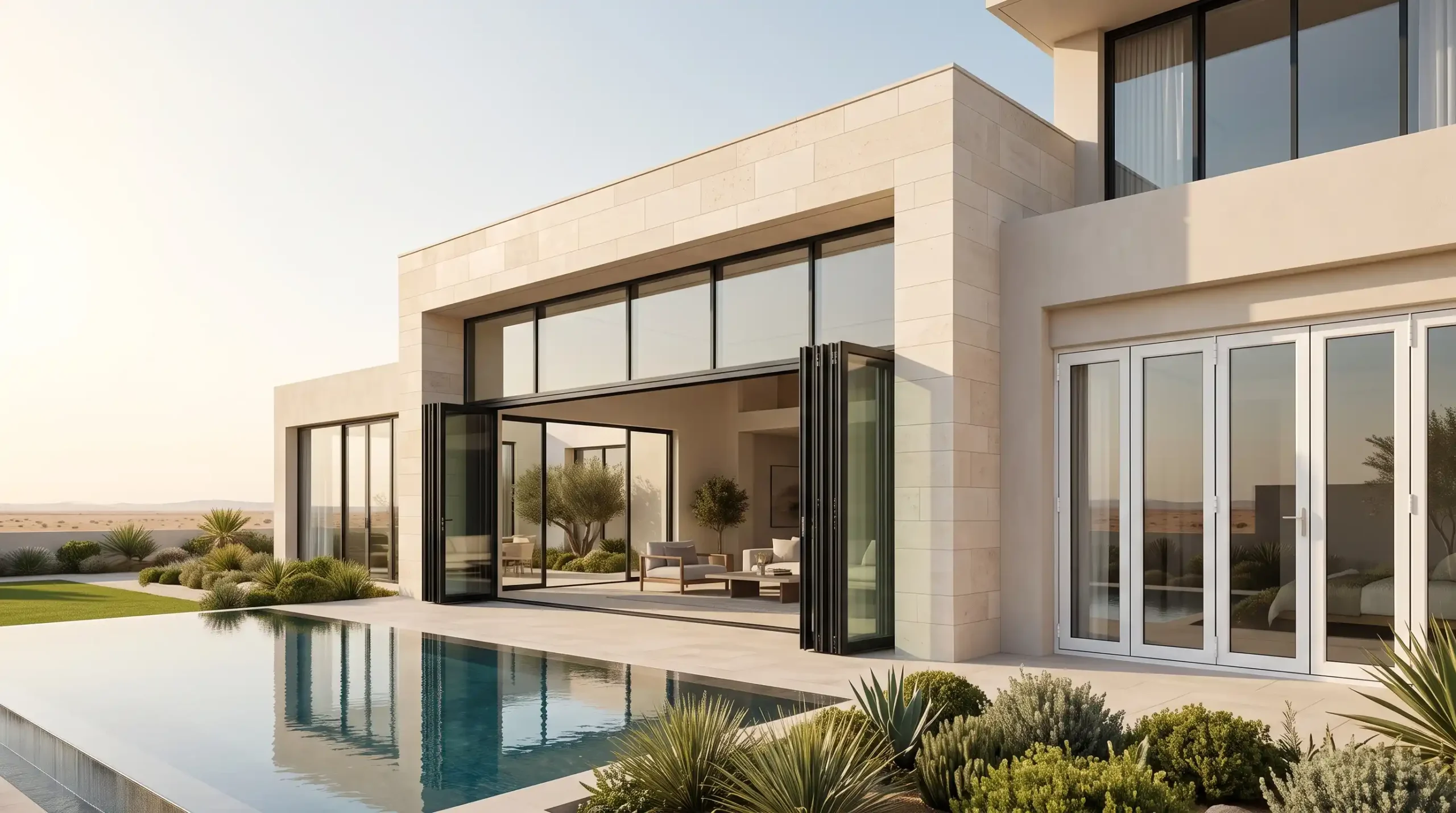
Understanding the difference between UPVC and aluminium bifold doors helps you invest wisely before renovating or extending. For homeowners in Dubai, material choice affects heat performance, durability, frame slimness, and long term cost in a demanding climate. This guide compares both materials across strength, energy efficiency, looks, maintenance, and value, giving you clear, practical guidance. By the end, you will know which material suits your opening, your budget, and your property style.
Overview
- The difference between UPVC and aluminium bifold doors comes down to strength, frame slimness, durability, and price: aluminium is stronger and slimmer, UPVC is cheaper.
- Aluminium bifold doors handle Dubai heat, large spans, and coastal conditions better, with thinner frames and more glass area.
- UPVC bifold doors cost less upfront and insulate reasonably well, but are bulkier and less suited to very wide openings.
- For most homes in Dubai, thermally broken aluminium is the durable long term choice, while UPVC suits tighter budgets and smaller openings.
Difference Between UPVC and Aluminium Bifold Doors
The difference between UPVC and aluminium bifold doors is fundamentally about the frame material and what it enables. Aluminium is a strong metal that supports slim frames, large glass panels, and wide spans. UPVC is a rigid plastic that is more affordable and naturally insulating but bulkier, since it needs thicker profiles to stay rigid.
-
What Each Material Is
Aluminium bifold frames are made from extruded metal, often with a thermal break to reduce heat transfer. UPVC folding doors use rigid plastic profiles, sometimes reinforced with internal steel. This core aluminium vs plastic bifold distinction drives nearly every practical difference in strength, appearance, and performance.
-
Why the Material Choice Matters
Your choice of bifold door materials influences everything from how slim the frames look to how the doors cope with heat, humidity, and years of daily use. In a climate like Dubai’s, these differences become more pronounced, making an informed decision especially valuable.
| Feature | Aluminium Bifold | UPVC Bifold |
|---|---|---|
| Frame slimness | Slim, more glass | Bulkier profiles |
| Strength | Very high | Moderate |
| Max opening width | Large spans | Smaller spans |
| Upfront cost | Higher | Lower |
| Durability in heat | Excellent | Good |
Aluminium Bifold Doors: Pros and Cons
Aluminium is the premium choice for external bifold doors, especially in demanding climates. It balances strength, slim looks, and longevity, though it comes at a higher price.
-
Advantages of Aluminium
Aluminium supports slim sightlines and large glass panels, handles wide openings, and resists warping in heat. With a thermal break and quality powder coating, it performs strongly against sun, humidity, and coastal air. Its strength makes it the standard for premium folding doors in dubai where large spans and durability matter.
-
Disadvantages of Aluminium
The main drawback is higher upfront cost. Without a thermal break, aluminium conducts heat, so specifying a thermally broken system is important in Dubai. It is also heavier, which means quality hardware and correct installation are essential.
Also Read: Bifold Doors Price in Dubai
UPVC Bifold Doors: Pros and Cons
UPVC folding doors appeal to budget-conscious buyers and smaller openings. They insulate naturally and cost less, but have limitations in span and appearance.
-
Advantages of UPVC
UPVC is affordable, naturally insulating, and low maintenance. It does not corrode and suits smaller residential openings well. For homeowners prioritising upfront savings on modest spans, UPVC vs aluminium bifold value can favour plastic.
-
Disadvantages of UPVC
UPVC frames are bulkier, reducing glass area, and are less rigid, limiting maximum width. Under intense, prolonged sun, lower-grade UPVC can be more prone to colour change and expansion over many years compared with aluminium.
Which Is More Energy Efficient?
Energy efficiency in Dubai is about keeping heat out and cool air in. Both materials can perform well when correctly specified, but the details differ.
1. How Each Material Insulates
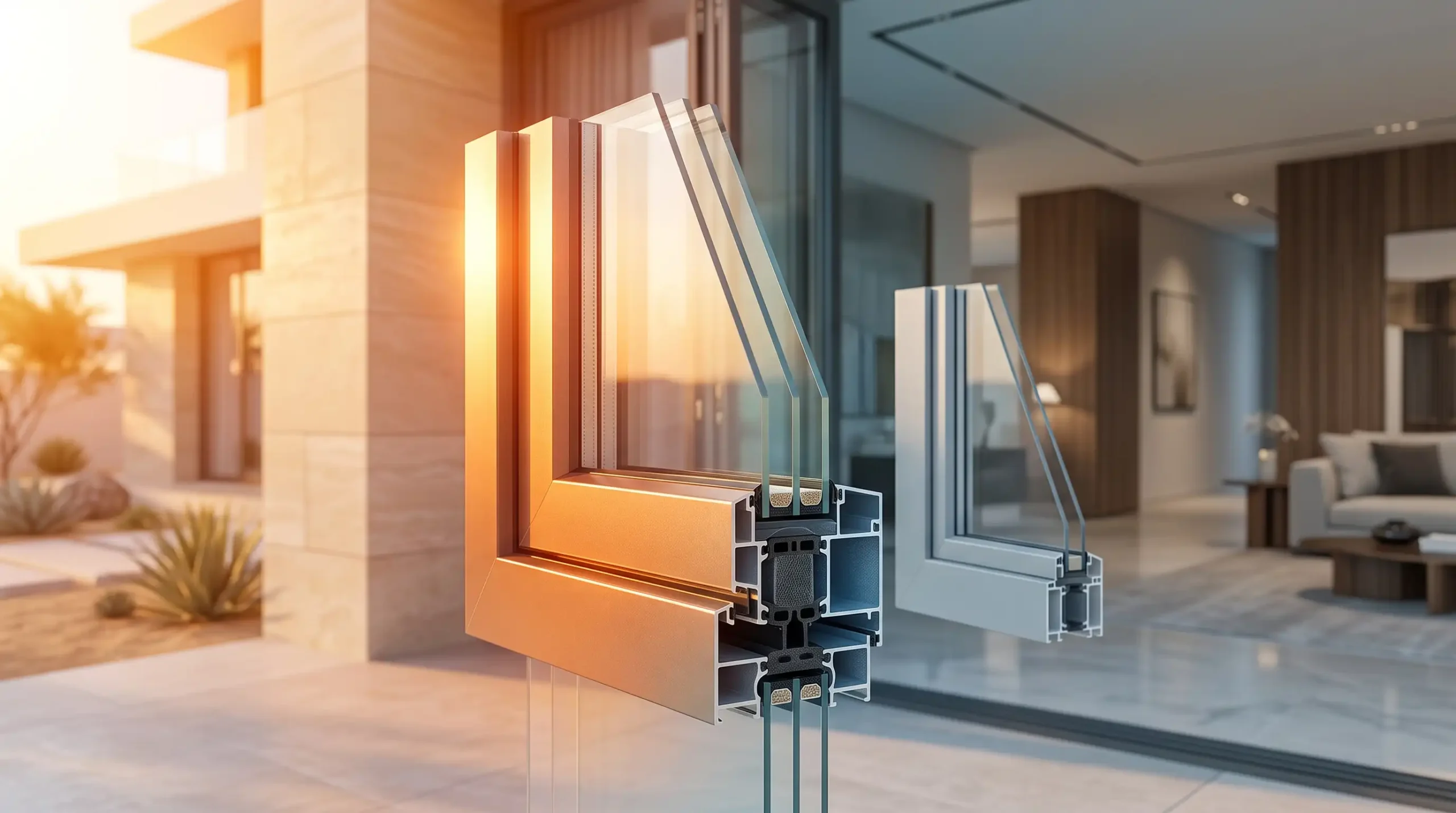
UPVC is naturally insulating because plastic conducts less heat. Aluminium conducts heat readily, so it relies on a thermal break, a barrier within the frame, to match that performance. A thermally broken aluminium system with solar control glazing performs excellently in local conditions.
2. The Role of Glazing
Regardless of frame material, glazing drives most of the thermal performance. Solar control double or triple glazing reduces heat gain significantly, which matters more in Dubai than the frame material alone.
Which Material Lasts Longer?
Longevity depends on material quality, finish, and how well the system copes with the local climate over decades.
1. Durability in Dubai Conditions
Aluminium generally lasts longer in intense sun and coastal air, resisting warping and holding its finish well when powder-coated. UPVC is durable too, but prolonged high temperatures can affect lower-grade plastic over many years, making material grade important.
2. Hardware and Moving Parts
Both systems rely on hinges, rollers, and tracks that need to be quality rated. Aluminium’s rigidity helps keep panels aligned over time, while heavier reliance on reinforcement in UPVC means hardware quality is critical for smooth long-term operation.
Also Read: Closet Doors Sliding vs Bifold
Which Looks Better Aluminium or UPVC?
Appearance is subjective, but the two materials create noticeably different looks that suit different property styles.
1. Slim Frames and Glass Area
Aluminium delivers slimmer frames and more glass, creating a sleek, contemporary appearance favoured in modern villas and apartments. UPVC frames are chunkier, which can suit traditional interiors but reduces the glass to frame ratio.
2. Finish and Colour Options
Aluminium offers a wide range of powder coated colours and dual colour finishes that hold up well in sun. UPVC is typically white or foiled in wood effects, with fewer long term colour options that resist fading in strong light.
Which Is Better for Large Openings?
Opening width is where the two materials diverge most sharply, and it often decides the choice for villas and open plan spaces.
1. Span and Panel Size
Aluminium’s strength allows larger, taller panels and wider overall openings without sagging. This makes it the clear choice for expansive terrace and garden openings common in Dubai villas.
2. When UPVC Still Works
For smaller openings such as a modest patio or utility area, UPVC can perform perfectly well. The limitation appears as spans grow, where plastic profiles struggle to stay rigid and aligned.
Are UPVC Bifold Doors Cheaper Than Aluminium?
Cost is often the deciding factor, so it helps to look beyond the upfront figure to long term value.
-
Upfront Price Difference
UPVC bifold doors are generally cheaper to buy and install than aluminium, which appeals to tighter budgets and smaller projects. The saving is most noticeable on modest openings.
-
Long Term Value
Aluminium’s durability, slimmer looks, and performance in heat can deliver better long term value, especially for larger openings and premium properties in Dubai where longevity and appearance matter.
Which Material Requires Less Maintenance?
Both materials are low maintenance compared with timber, but their upkeep needs differ slightly.
Cleaning and Upkeep
Both wipe clean easily and resist corrosion. The main shared task in Dubai is keeping tracks clear of fine dust and sand so rollers run smoothly. Neither material needs painting or sealing like timber.
Long Term Care
Aluminium’s powder-coated finish is highly durable and easy to maintain. UPVC needs occasional attention to seals and, on lower grades, may show wear from prolonged sun exposure sooner than aluminium.
Things Most Homeowners Don’t Realise Until After Installation
Some practical realities only become clear once the doors are fitted and in daily use. Knowing them in advance helps you specify better.
Thermal Break Is Not Optional in Dubai
Many buyers assume all aluminium performs the same. Without a thermal break, aluminium transfers heat, so external openings in Dubai should always use thermally broken profiles for comfort and efficiency.
Track Maintenance Matters More Locally
Fine sand and dust are a genuine factor in the UAE. Bottom tracks on both materials need periodic cleaning, and skipping this is the most common cause of stiff or noisy operation over time.
Also Read: Sliding Door vs Bifold Door Cost in Dubai
Choosing the Best Option for Your Home’s Style
The right material depends on your opening size, budget, climate exposure, and the look you want to achieve.
Best for Modern Villas and Large Openings
For contemporary villas, wide terrace openings, and coastal exposure, thermally broken aluminium is usually the strongest choice thanks to slim frames, large glass, and durability.
Best for Budget and Smaller Projects
For smaller openings, tighter budgets, and sheltered locations, UPVC folding doors can be a sensible, cost effective option that still delivers the folding function and reasonable insulation.
Get Your Aluminium Bifold Doors from Nitrex Tech
Weighing the difference between UPVC and aluminium bifold doors means balancing budget against strength, slim looks, heat performance, and how long the doors will last in a demanding climate. For wide openings, coastal exposure, and premium finishes in Dubai, thermally broken aluminium usually wins on durability and appearance, while UPVC suits smaller openings and tighter budgets. Confirm glazing, thermal break, and hardware quality, then request an itemised quote from Nitrex tailored to your opening and property style.
FAQ’s
Can aluminium bifold doors handle Dubai’s extreme heat better than UPVC?
Yes. Aluminium resists warping in intense heat, and with a thermal break it manages heat transfer effectively. It generally copes better than UPVC over the long term in Dubai’s climate.
Do UPVC bifold doors yellow over time in the UAE sun?
Lower grade UPVC can be prone to colour change under prolonged, intense sun. Quality UV stabilised UPVC resists this better, but aluminium’s powder coated finish holds colour more reliably.
Which material is more secure against break ins?
Aluminium is stronger and rigid, supporting robust multi point locking. UPVC can be secure too when reinforced and fitted with quality locks, but aluminium’s strength gives it an edge.
Can UPVC bifold doors be painted or customized in color?
UPVC is typically white or foiled in wood effects, and painting it reliably is difficult. Aluminium offers far wider powder coated colour and dual colour options that last.
How do aluminium bifold doors perform in coastal areas like Dubai Marina?
Powder coated aluminium resists corrosion well, making it suitable for coastal areas across the UAE. Quality marine grade finishes and hardware further improve longevity near the sea.
Which material is more eco friendly?
Aluminium is highly recyclable and often contains recycled content. UPVC is recyclable too but less repeatedly. Both can be responsible choices depending on sourcing and end of life handling.
Do aluminium bifold doors condensate more than UPVC?
Non thermally broken aluminium can be more prone to condensation because metal conducts heat. A thermally broken aluminium system with good glazing performs comparably to UPVC.
Can I mix aluminium and UPVC in the same project?
Yes, though matching frame sightlines and colours is harder. Many homeowners keep materials consistent for a cohesive look, but mixing is possible where budget or function requires it.
Which material is better for soundproofing?
Soundproofing depends mostly on the glazing, not the frame. Both materials support acoustic glazing, so specify laminated or acoustic units for busy roads or high rise locations in Dubai.
How often do UPVC bifold door tracks need replacing compared to aluminium?
With good maintenance, both tracks last many years. Aluminium’s rigidity helps keep alignment, while UPVC systems may need slightly more attention to hardware over their lifespan.
Which is better for high rise apartments in Dubai?
Aluminium is often preferred in high rise apartments for its strength, slim frames, wind resistance, and larger glass area, which suits modern towers and their views.
Do both materials support double and triple glazing?
Yes. Both aluminium and UPVC bifold doors accept double and triple glazing, including solar control and laminated units, which is important for heat and sound in Dubai.
Which has a higher resale value impact on Dubai properties?
Aluminium’s premium look and durability often appeal more to buyers of higher end properties. Value uplift depends on the property and market, but slim aluminium systems are widely favoured.
Are aluminium bifold doors heavier than UPVC?
Aluminium frames can be heavier per panel, which is why quality hardware and correct installation matter. This weight supports larger, more rigid panels than UPVC typically allows.
Which material offers slimmer frames and more glass area?
Aluminium offers slimmer frames and a higher glass to frame ratio, letting in more light and providing cleaner views than the bulkier profiles UPVC requires to stay rigid.
Sources
- Glass and Glazing Federation (ggf.org.uk): guidance on glazing types, thermal performance, and safety glass.