
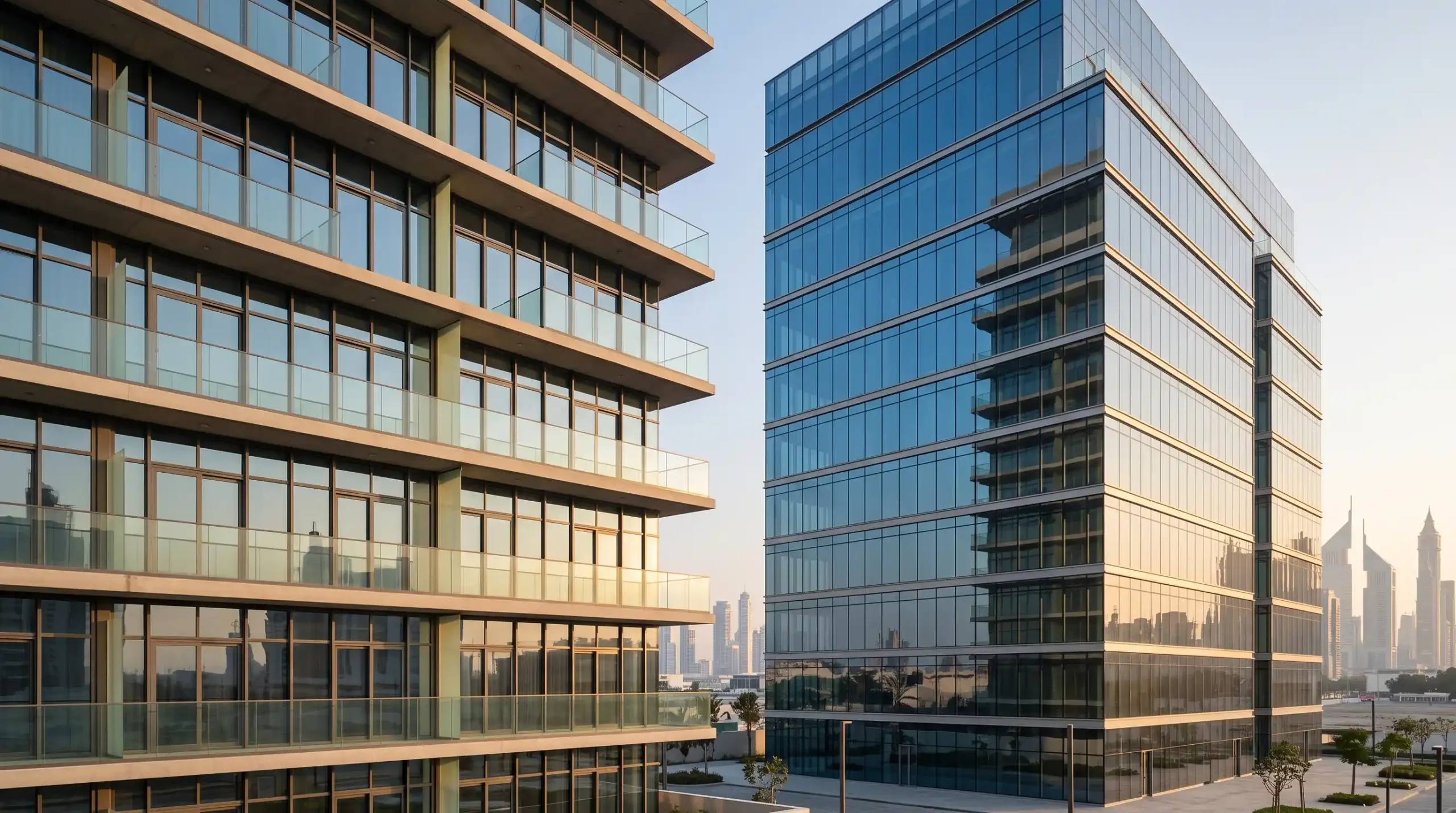
Understanding window wall vs curtain wall systems is essential before specifying a glazed facade. For developers and architects in Dubai, the choice affects cost, appearance, performance at height, and how the building handles heat and wind. This guide explains how each system is built, where they differ on price, and which suits which building type. By the end, you will know which facade approach fits your project, budget, and design ambitions.
Overview
- The window wall vs curtain wall difference is structural: a window wall sits between floor slabs, while a curtain wall hangs in front of them as a continuous skin.
- Window walls are usually cheaper and simpler to install floor by floor, while curtain walls offer a seamless glazed facade and better performance at height.
- Curtain walls suit high rise towers and premium facades, while window walls suit mid rise residential and budget conscious projects.
- For buildings in Dubai, glazing specification and weather sealing matter most given heat, glare, and wind loads at height.
Window Wall vs Curtain Wall: The Basic Difference
The fundamental window wall vs curtain wall distinction is where the system sits in relation to the building’s floor slabs. A window wall installs between each floor slab, resting on the slab below and tucking under the slab above. A curtain wall passes continuously in front of the slabs, hanging off the structure like an unbroken outer skin.
1. How a Window Wall Sits
A window wall is captured between floors, so each storey has its own band of glazing framed by the slab edges. The floor slab edge is usually visible or covered by a spandrel panel. This makes the system self-supporting floor by floor rather than hanging from the structure.
2. How a Curtain Wall Hangs
A curtain wall is suspended in front of the slabs and anchored back to them at intervals. Because it runs continuously across floor lines, it creates an uninterrupted glazed surface. This is the defining feature of a curtain wall system and the reason it delivers that seamless tower facade look.
3. Why the Difference Matters
Where the system sits changes almost everything else: how loads transfer, how it seals, how it looks, and what it costs. Grasping this single structural difference is the key to the whole facade systems comparison that follows.
How Each System Is Built
The construction method flows directly from where each system sits, affecting installation, sealing, and how the facade interacts with the building structure.
Window Wall Construction
A window wall is typically fabricated as framed units installed between slabs, often from the interior, which can reduce the need for external access equipment. Each floor’s glazing is sealed to the slab edges, and spandrel panels or slab covers conceal the structure between storeys.
Curtain Wall Construction
A curtain wall is built as either stick systems assembled piece by piece on site, or unitised panels prefabricated off site and hung onto the structure. Unitised systems speed up installation on tall buildings and improve quality control. A quality aluminium framed facade forms the backbone of most modern systems.
Structural Load and Sealing
Because a window wall bears on the slab below, its load path is simple, but every floor junction is a potential sealing point. A curtain wall transfers wind and its own weight back to the slabs through brackets, with continuous seals that manage movement and weather across floor lines.
| Aspect | Window Wall | Curtain Wall |
|---|---|---|
| Position | Between floor slabs | In front of slabs |
| Support | Bears on slab below | Hangs off structure |
| Appearance | Banded by floors | Seamless glazed skin |
| Install access | Often from inside | Often from outside |
| Best height | Low to mid rise | Mid to high rise |
Cost: Where the Two Systems Diverge
Budget is often decisive, and the two systems separate clearly on both upfront and lifecycle cost.
Upfront Cost Differences
A window wall system is generally less expensive upfront. Its framing is lighter, it often installs from inside without extensive scaffolding or cranes, and floor by floor sealing uses simpler details. This makes it attractive for cost conscious residential developments.
Long Term and Lifecycle Cost
A curtain wall usually costs more initially but can offer strong long term value on tall buildings through better sealing, durability, and a premium appearance that supports higher asset value. Maintenance access and replacement strategy also factor into the lifecycle comparison.

Performance in the Dubai Climate
Facade performance in Dubai is shaped by intense heat, strong solar glare, wind loads at height, and airborne dust. Both systems must be specified carefully for these conditions.
Heat, Glare, and Cooling Load
Solar control glazing is essential for either system in Dubai, reducing heat gain and cooling costs. Continuous curtain walls with high performance glazing can manage large glazed areas efficiently, while window walls benefit equally from specifying the right glass for each floor band.
Wind Loads and Sealing at Height
At height, wind loads increase, and sealing becomes critical. Curtain walls are engineered to manage movement and weather across continuous facades, which suits tall towers common in Dubai. Window walls perform well on lower buildings where floor junction sealing is easier to manage and maintain.
Which System Fits Which Building
Matching the facade to the building type is where the decision becomes practical for developers and architects.
Best for Residential and Mid Rise
Window walls often suit residential towers and mid rise buildings where cost efficiency and floor by floor installation are advantages. They are common in apartment developments where each unit has its own glazing band.
Best for High Rise and Premium Facades
Curtain walls suit high rise commercial towers, landmark buildings, and premium residential projects in Dubai where a seamless glazed appearance and performance at height are priorities. For a striking continuous facade, an aluminum glass curtain wall is the standard specification.

What to Ask Your Facade Contractor
The right questions help you compare proposals accurately and avoid costly surprises later.
Questions on Specification and Performance
Ask about glazing specification, thermal performance, wind load engineering, and water tightness testing. Confirm how the system seals at floor junctions or across floor lines, and how it copes with Dubai’s heat and dust over time.
Questions on Installation and Maintenance
Ask how the facade will be installed, whether from inside or outside, and what access is needed for future maintenance and glass replacement. Clarify warranty coverage on frames, glazing, and workmanship separately, and review the contractor’s relevant Projects to see comparable work.
Get Your Curtain Wall System from Nitrex Tech
Choosing between window wall vs curtain wall comes down to building height, budget, appearance, and performance needs. Window walls offer cost efficient, floor by floor glazing for mid rise and residential projects, while curtain walls deliver a seamless, high performing facade for taller and premium buildings in Dubai. Confirm your glazing specification and sealing strategy for the local climate, then request tailored advice from Nitrex to specify a facade suited to your building and long term goals.
FAQ’s
Can a curtain wall be used on low rise buildings?
Yes. A curtain wall can be used on low rise buildings for a premium, seamless glazed look, though it often costs more than a window wall. The choice depends on appearance goals and budget rather than height alone.
Which system provides better thermal insulation?
Both can achieve strong thermal performance with the right glazing and thermal breaks. Curtain walls with high performance glazing manage large continuous areas efficiently, while window walls perform well when each floor band is correctly specified.
Is a window wall cheaper to maintain long term?
Window walls can be simpler and cheaper to maintain on lower buildings because access is easier. On tall towers, curtain walls are engineered for durability, though maintenance access at height should be planned into the lifecycle cost.
Which handles wind loads better on high rise buildings?
Curtain walls handle wind loads better on high rise buildings because they are engineered to manage movement and weather across continuous facades, making them the standard choice for tall towers in Dubai.
Can both systems use double or triple glazing?
Yes. Both window walls and curtain walls accept double and triple glazing, including solar control and laminated units, which is important for heat and glare management in the UAE.
Which system is faster to install?
Unitised curtain walls can be very fast on tall buildings because panels are prefabricated and hung quickly. Window walls install efficiently floor by floor, often from inside, which suits mid rise construction sequencing.
Does a curtain wall increase property value more?
A curtain wall’s seamless, premium appearance can support higher asset value on landmark and high rise buildings. Value depends on the building, location, and market rather than the facade system alone.
Which offers better soundproofing?
Soundproofing depends mainly on glazing specification. Both systems can incorporate acoustic laminated glass, so specify accordingly for busy roads or dense urban locations across Dubai.
Can I combine both systems on the same building?
Yes. Many buildings use a curtain wall on prominent elevations and window walls elsewhere to balance appearance and cost. A facade engineer confirms how the systems interface and seal together.
Which is more resistant to water leakage?
Curtain walls are engineered with continuous drainage and pressure equalisation for strong water resistance at height. Window walls perform well when floor junctions are detailed and sealed correctly.
Do both systems meet UAE building codes?
Both can be specified to meet applicable requirements in the UAE when correctly engineered and installed. Always confirm compliance with your facade contractor and the relevant authorities for your project.
Which is better for sand and dust exposure?
Both handle dust well with quality seals and finishes. Powder coated aluminium resists the abrasive, dusty conditions found across Dubai, and regular facade cleaning maintains appearance and performance.
Can a window wall be upgraded to a curtain wall later?
Converting a window wall to a curtain wall is a major undertaking, effectively a facade replacement, because the systems attach to the structure differently. It is rarely practical without significant work.
Which system is more energy efficient for cooling costs?
Both can be highly energy efficient with solar control glazing and thermal breaks, which reduce cooling load. In Dubai’s heat, the glazing specification influences cooling costs more than the system type itself.
Which allows more design flexibility?
Curtain walls generally offer more design flexibility for large, continuous, and shaped glazed facades. Window walls are more modular and floor bound, which suits repetitive residential layouts.